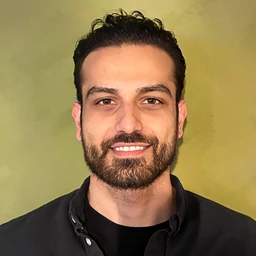
Shayan Majidy
I am a quantum computing theorist working towards reliable quantum computers for scientific discovery. My research connects quantum error correction, the joint design of quantum algorithms and architectures, and quantum dynamics and thermodynamics—from understanding how quantum information behaves in physical systems to protecting it and putting it to use.
I'm a Senior Research Scientist at QuEra, Associate in Misha Lukin's group at Harvard, and the lead author of Building Quantum Computers (Cambridge University Press).
Research
Browse publicationsGoogle Scholar
Quantum error correction
What is the minimum cost of protecting and manipulating logical quantum information? I work broadly on reducing the overhead of quantum error correction, from the design of codes and logical operations to syndrome extraction and fault-tolerant architectures. One direction is a gate-first approach to code design: rather than choosing a code and accepting the logical operations it supports, I design codes around the computations they must perform. Our phantom codes illustrate one extreme, implementing in-block entangling gates through classically tracked relabellings, without applying physical gates. This raises a broader question: how much logical computation can be performed with such simple operations, and how large must the code be? Our work on automorphism gates answers this for single-qubit Clifford gates and qubit permutations on stabilizer codes: we establish their maximum logical power, construct codes attaining it, and derive tight bounds on the required number of physical qubits.
Quantum algorithms and architectures
How should algorithms, error correction, and hardware be designed together? I study quantum computation as a co-design problem, developing algorithms and fault-tolerant protocols around the capabilities and constraints of the hardware that will run them. This perspective grew from my role as lead author of Building Quantum Computers and shapes my work on quantum simulation, cooling, and state preparation. For example, I helped design a teleportation-based neutral-atom architecture that exploits non-local connectivity and parallel control to remove entropy while processing logical information.
Quantum dynamics and thermodynamics
How do microscopic dynamics govern quantum information loss? I investigate the mechanisms governing entropy production, seeking physical structures that suppress or amplify decoherence. One important setting is dynamics constrained by conservation laws, where symmetries can fundamentally reshape thermalization. During my PhD, I helped establish noncommuting-charge physics as a distinct subfield, showing that noncommuting conserved quantities can enhance entanglement, generate critical phases in monitored quantum circuits, and remove dynamical structures that inhibit thermalization.
Background & CV
- 2026
Senior Research Scientist, QuEra
- 2026
Associate, Harvard University
- Adviser:
- Mikhail D. Lukin
- 2024–2026
Postdoctoral Fellow, Harvard University
- Advisers:
- Mikhail D. Lukin
Michael Gullans - Funding:
- Banting Fellowship, 2024–2026
- 2019–2024
Ph.D. in Physics, University of Waterloo
- Advisers:
- Raymond Laflamme
Nicole Yunger Halpern - Funding:
- Vanier Scholarship, 2021–2024
- 2018–2019
M.Sc. in Physics, University of Waterloo
- Advisers:
- Raymond Laflamme
- 2011–2015
B.Sc. in Theoretical Physics, University of Guelph
Selected recent talks
-
Achieving the limits of automorphism gates
-
Entangling logical qubits without physical operations
-
Entangling logical qubits without physical operations
-
Architectural mechanisms of a universal fault-tolerant quantum computer
-
Noncommuting charges can increase entanglement and induce critical dynamics
Selected honours
- 2025W.B. Pearson MedalUniversity of Waterloo; creative doctoral research; normally one award per Science department annually.
- 2024Banting Postdoctoral FellowshipGovernment of Canada; CAD 140,000 over two years. Field-specific ranking: 3rd of 185 applicants.
- 2024John Brodie Memorial Award (co-recipient)Perimeter Institute; recognizes creativity in doctoral research.
- 2022IQC Achievement AwardInstitute for Quantum Computing; excellence in graduate research.
- 2021Vanier Canada Graduate ScholarshipGovernment of Canada; CAD 150,000 over three years.
Textbook & outreach
Textbook
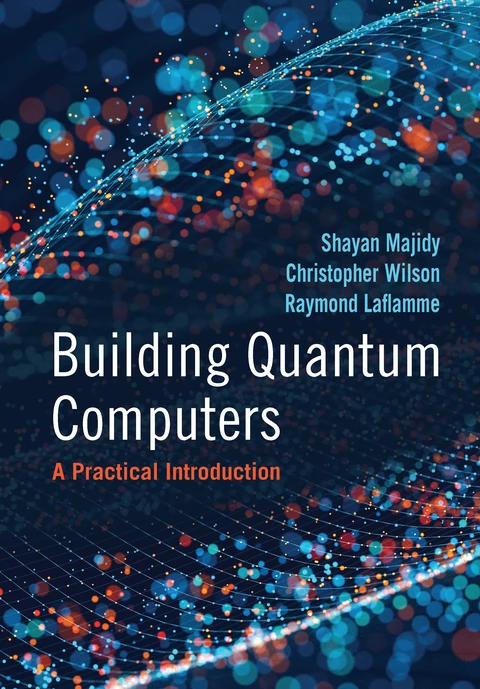
Building Quantum Computers:
A Practical Introduction
Cambridge University Press (2024)
Written for advanced undergraduates and beginning graduate students, the book compares physical implementations through shared concepts and notation. Writing it developed the cross-platform perspective that informs my work on hardware-aware architectures and scientific applications.
The book is used in university teaching internationally as an introduction to quantum computing hardware.
Outreach
Through Unentangled, my non-profit, I worked to broaden access to science by bringing current research into high-school classrooms. The programme was built on the idea that more people should benefit not only from scientific knowledge, but from the tools science provides for reasoning, questioning, and solving problems. At its peak, Unentangled served more than 1,000 students annually with a team of 10 volunteers.